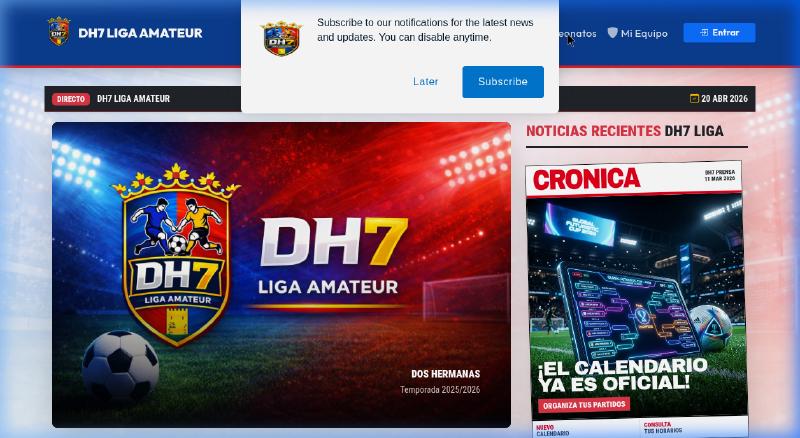
Developing an application capable of scaling and delivering a seamless user experience across both web and mobile devices requires much more than just code; it demands solid architectural design. Today, I want to share the technical inner workings of my comprehensive football league management platform, a project designed from scratch to centralize competitions, player statistics, and real-time schedules.
This platform isn’t merely a web system. Its backend, built with Python and Django, exposes a high-performance REST API specifically engineered to integrate natively with mobile applications developed in React Native.
Below, I explore the core features and design decisions that bring this sports ecosystem to life.
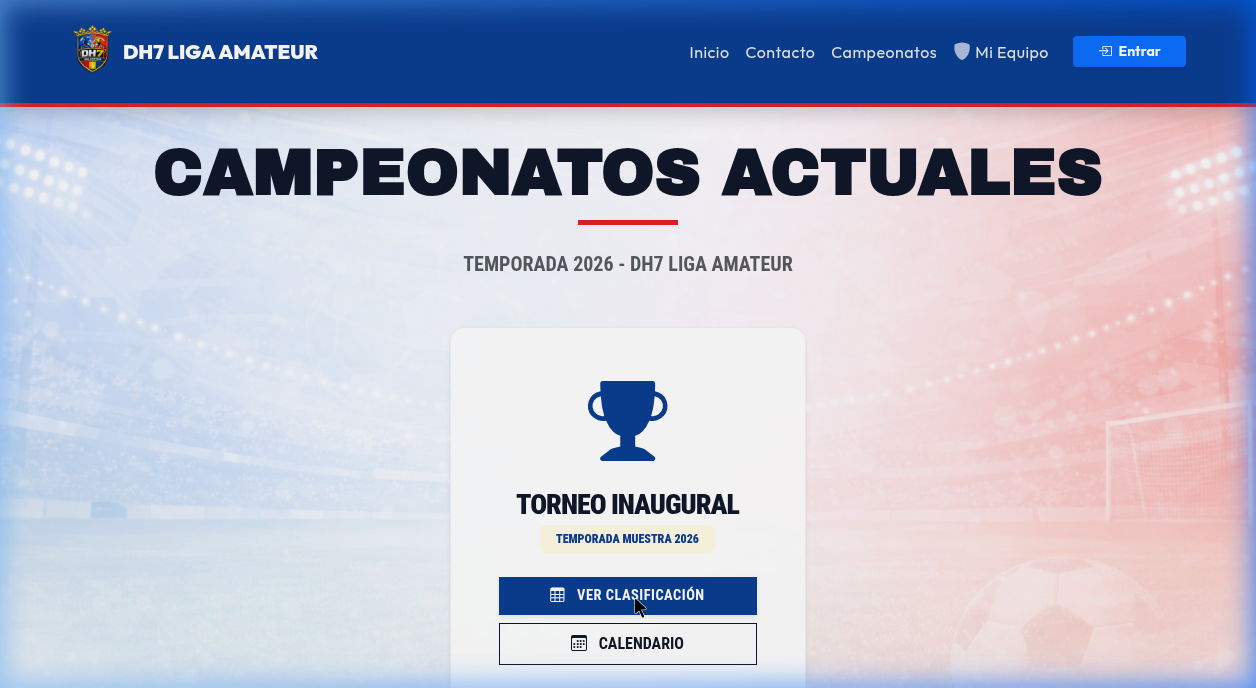
1. API-First Architecture and Service Layer
One of the project’s primary objectives was to guarantee scalability and code cleanliness. To achieve this, the application was architected following the Service Layer pattern.
Instead of mixing business logic with HTTP responses, the system is clearly divided into three tiers:
- Data Layer: Highly structured database models, modularly separated into domains (players, teams, standings, matches).
- Service Layer: The mathematical “brain” of the application resides here. Statistical calculations and complex algorithms run in isolated modules, ensuring agile and reusable code.
- API Controllers: Utilizing Django REST Framework (DRF), requests from mobile devices query the service layer and receive ultra-lightweight JSON responses, ensuring maximum app fluidity.
2. Intelligent Algorithms and Core Functions
A premium sports platform demands real-time analysis to keep users engaged. To accomplish this, specific high-complexity algorithms were developed:
The “Player Form” Algorithm
Similar to popular sports video games, the platform features a system that mathematically evaluates real-world player performance. The backend analyzes performance across the last few matches played, granting a dynamic score (Rating 0-99). This algorithm evaluates:
- Multipliers for recent milestones (hat-tricks or braces).
- Bonuses for consistency and uninterrupted goal-scoring streaks.
- Collective success metrics (team winning streaks or undefeated runs). As a result, the app automatically highlights players who are “on fire” by adding dynamic tags to their profiles.
Animated Draw Generator
System administration shouldn’t just be text and tables. For group stage and knockout draws, an asynchronous visual module was built using plain JavaScript. This system emulates a real “Champions League” style draw:
- Virtual “balls” are drawn using probability calculations and real-time animations.
- As the draw visually progresses, asynchronous AJAX calls communicate with the API so Django can generate the underlying match pairings and tournament brackets behind the scenes.
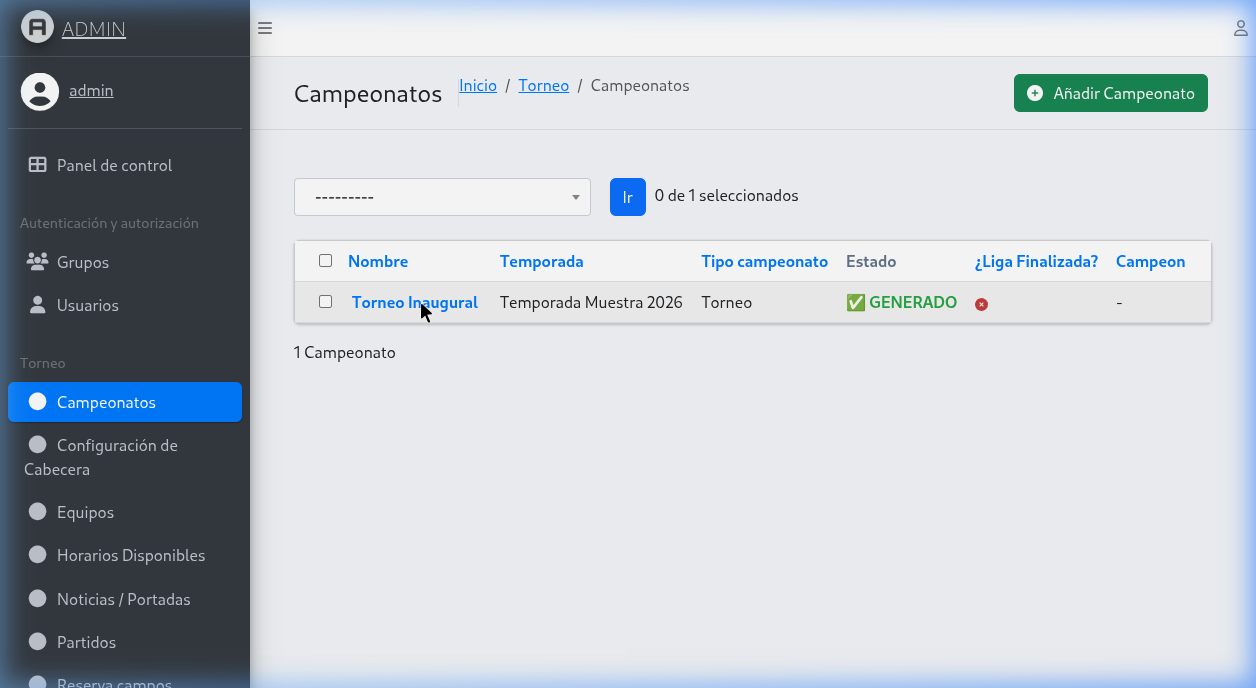
3. User Retention: Push Notifications
Mobile app proactivity is crucial to the player experience. The platform integrates direct communication with smartphones via OneSignal push notifications.
The server assumes full responsibility for communications via its own notification API wrapper:
- Global Alerts: Notifies the entire user base when a new season or tournament kicks off.
- Intelligent Segmentation: Through specific filters in HTTP requests, the system can send alerts exclusively to the members of two specific teams if there is a schedule modification or if a match report has been published.
4. DevOps Philosophy: Zero-Friction Deployment (CI/CD)
Writing quality code is important, but putting it into production safely and automatically is what marks professional excellence. The platform boasts a fully automated Continuous Integration and Continuous Deployment (CI/CD) pipeline powered by Jenkins.
When the code is ready to go live, the following phases are executed unattended on the VPS:
- Synchronization: Secure extraction of the latest release from the remote repository.
- Dependencies: Verification and installation of any new Python system packages.
- Persistence: Safe application of structural database migrations and static file collection.
- High Availability: Systematic restart of web services, ensuring mobile users begin consuming the new API version with zero server downtime.
Conclusion
Developing a platform from scratch and connecting it to mobile devices requires mastering the full spectrum of Full-Stack development: relational modeling, lightweight API design, asynchronous analytical algorithms, and robust DevOps workflows. The result is a product capable of elevating amateur football management to the next technological level.